Sales Flow Redesign
Using research to build a better sales workflow on Salesforce
A Workflow That Didn’t Work
Our task was simple on paper: map the mess, fix the flow, and make Salesforce actually work for people. But what we were really walking into was a culture of workarounds, dropped handoffs, and good people trying to do their best with broken tools.
What I was responsible for
I focused on surfacing pain points directly from dealers through 1:1 interviews and walkthroughs. I also visualised both the AS-IS and TO-BE journeys, helping the team (and stakeholders) see the big picture and make smarter decisions about what needed to change.
A Structured and Scalable Redesign
Identify Business Needs
User Interviews
AS-IS Journey
Ideation
To-Be Journey
Identifying the Gaps
Aligning on Business Goals
To better understand MiX Telematics’ goals, we had a discovery session with the head of platform support and the CTO (the client).
They supplied us with the following business needs:
Faster quoting and approval processes
Easier onboarding for new staff
Increase user independence
Kicking off with questions, not assumptions
My dealer Interview Finding
Across interviews, I heard the same stories:
"If I’m off by one approval, the whole process gets stuck."
"I have no visibility into technical and finance timelines"
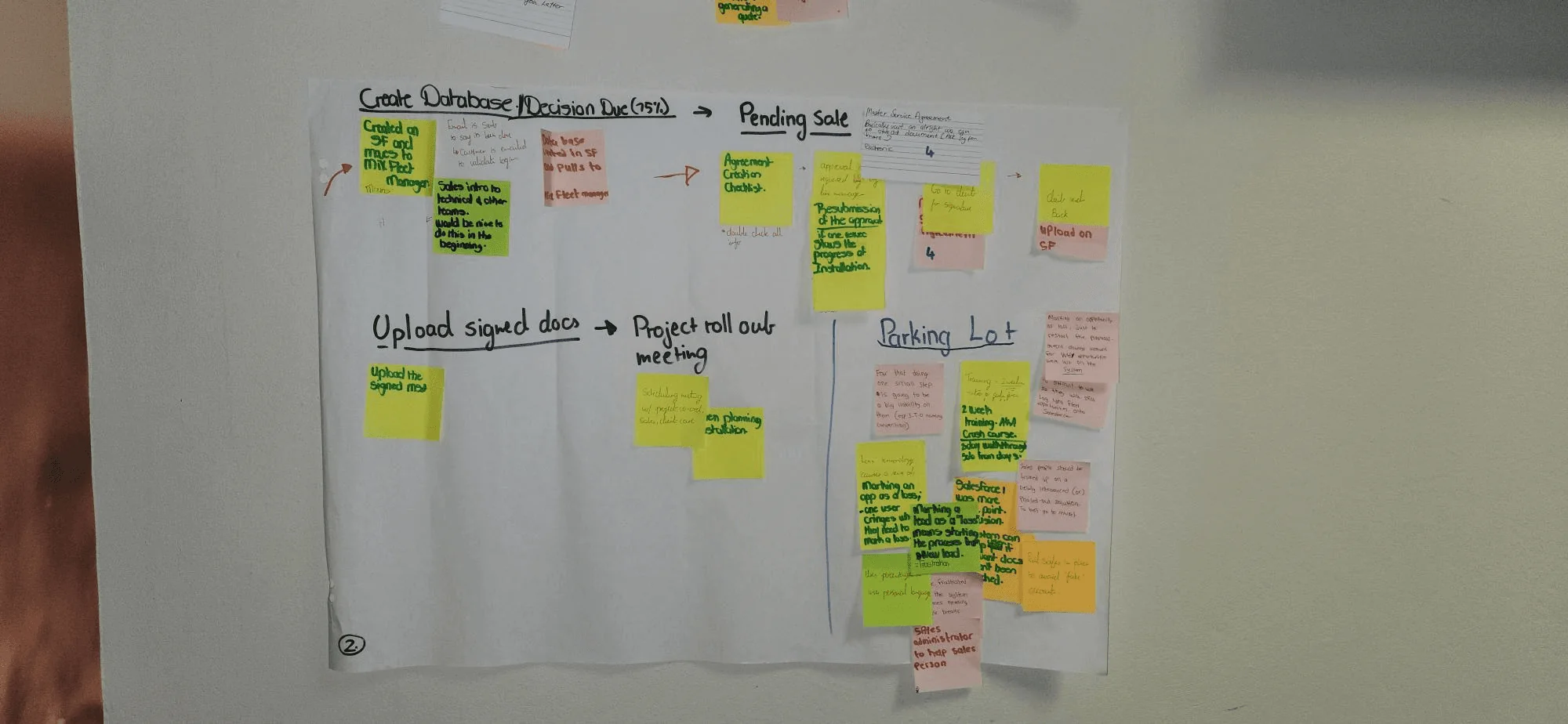
Co-Creating the AS-IS Map
As a team we then had a workshop with a Sales leader that manages the training of new staff.
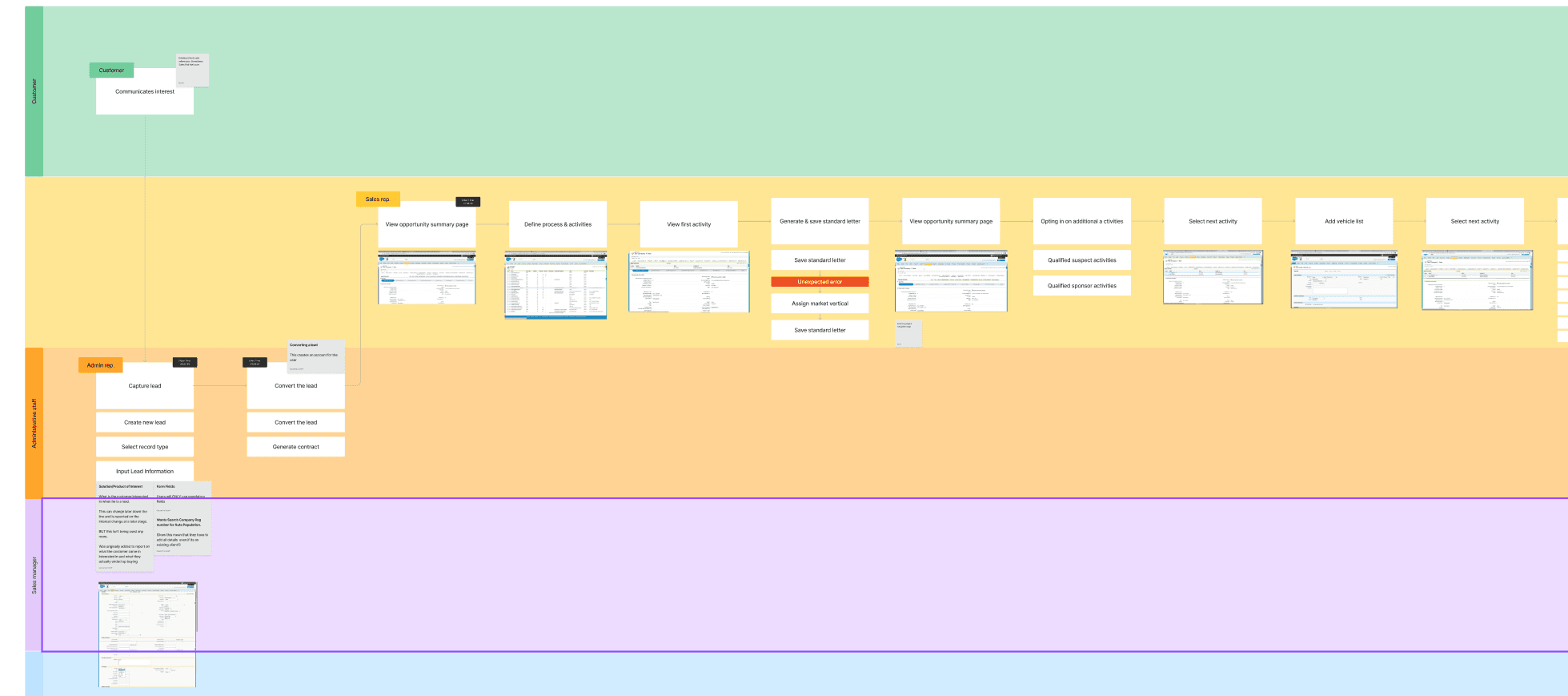
With their help I developed an in-depth AS IS service blueprint with explanations of related responsibilities, platforms and processes
I also developed a shorter more synthesized variant without screenshot for presentation and conversational use
As-Is Service BlueprintStitching together the full picture
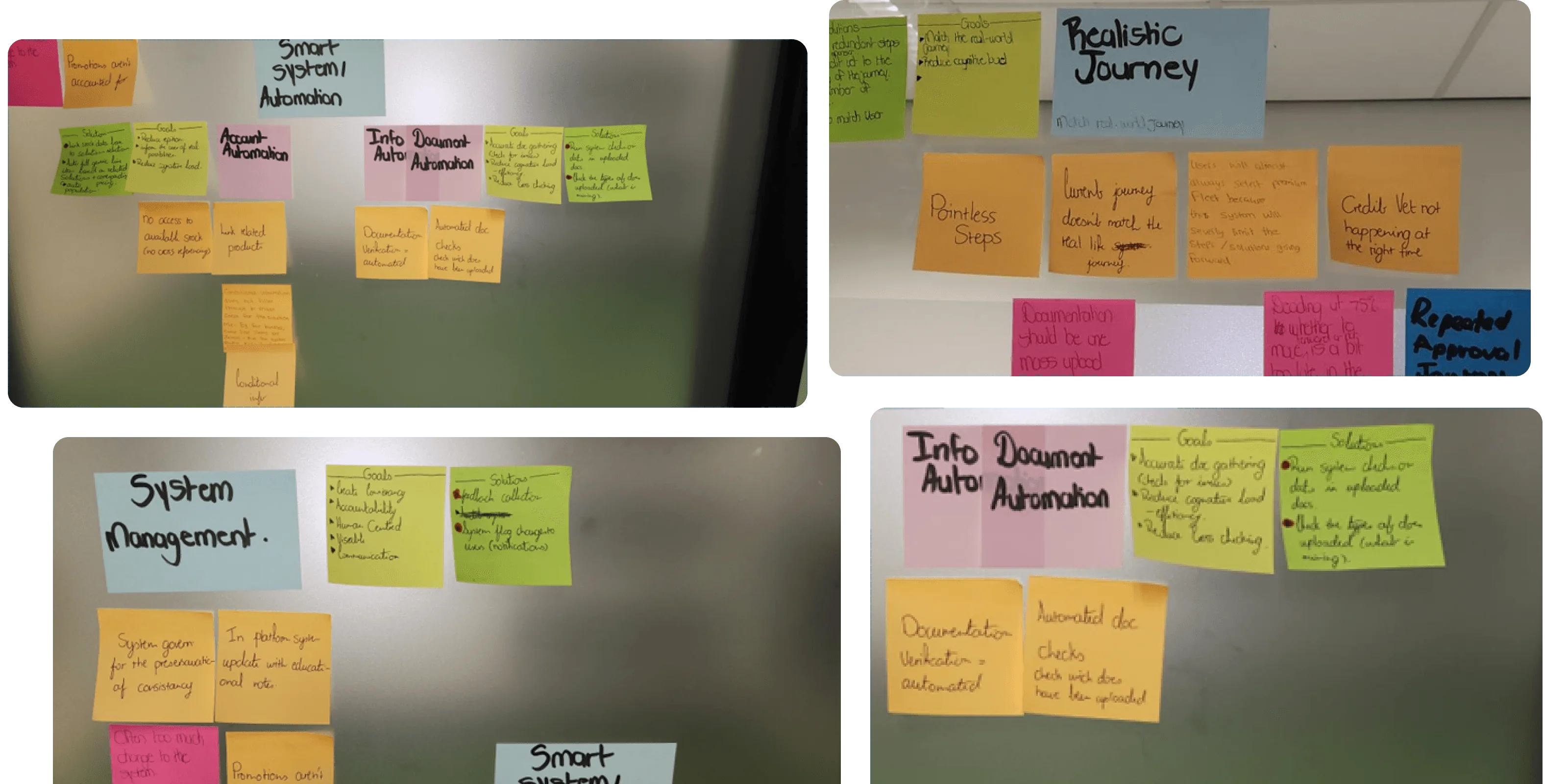
Synthesizing Pain Points
After our interviews we synthesized as a team, we cross-analyzed findings to spot repeating pain patterns.
Six common issues emerged:
Poor system alignment
Manual handoffs and unclear ownership
High effort to onboard new staff
Swivel-chairing between tasks
No process automation
Lack of task visibility or notifications
Building a Journey That Worked for Sales
Redesigning the Workflow
With research in hand, we shifted to co-creation of the To-be journey. We held ideation sessions with our Salesforce consultant and key stakeholders from the client.
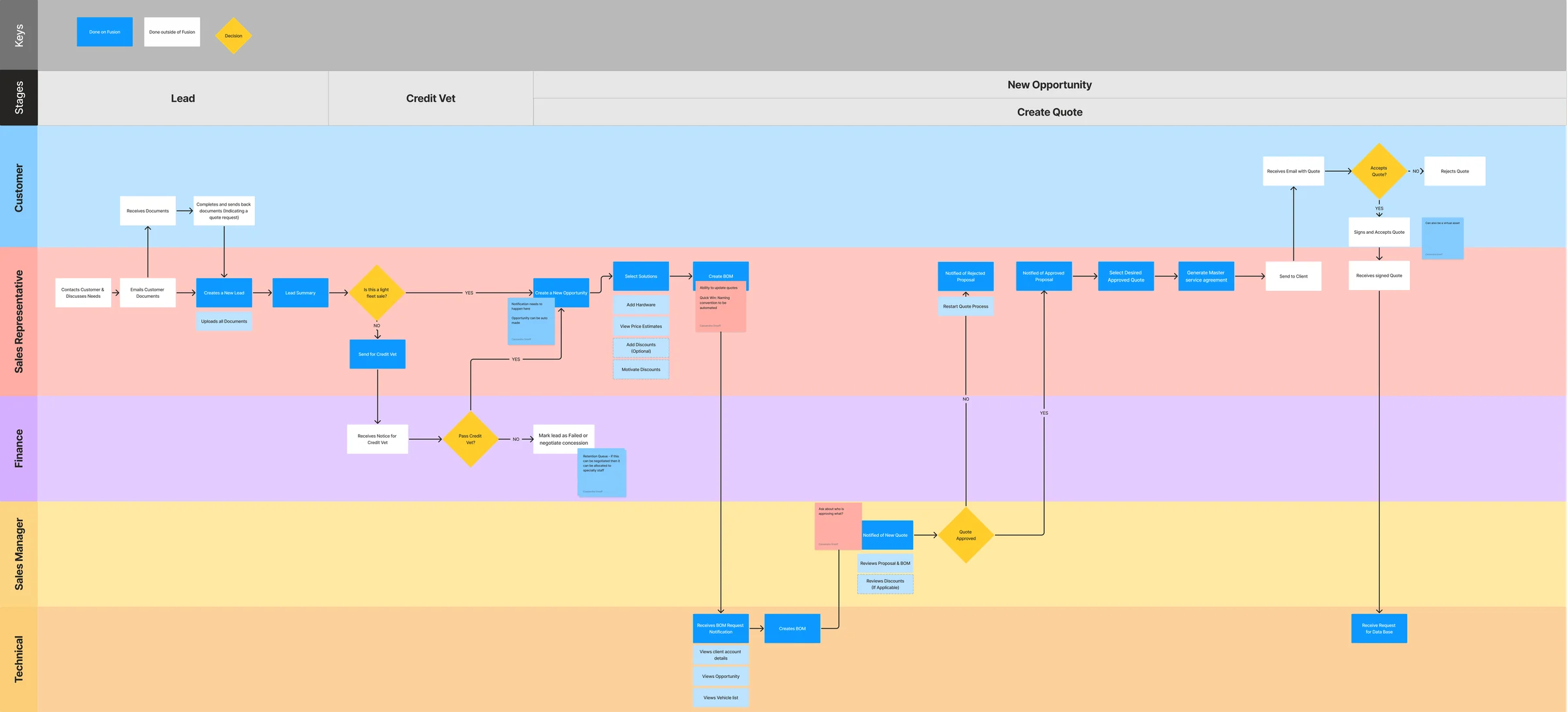
To-be Service BlueprintWhat Changed?
The TO-BE journey reduced steps from 22 to 14.
Quotes and documents are now centralized
Sales can send quotes earlier in the process
Approval steps are clearer and better timed
Opportunity creation is automated for light sales
Delivering a strategy people could act on
The result was more than just a cleaner flow. We packaged our work into a strategic report that showed exactly where things were breaking, and what to fix first. The report did not deliver a roadmap to ignore, but a mirror to the mess. It combined:
A detailed AS-IS and TO-BE journey
Themed insights across roles and tools
Quick wins that could be tackled easily
Long-term fixes to onboarding, and automation
Turning Research Into Actionable Outcomes
What We Delivered
We reimagined the Salesforce quoting journey reducing 22 steps to 14 and untangling handoffs between Sales, Finance, and Technical.
The new blueprint focused on quoting speed, automation, and clear ownership without straying from Salesforce best practices.
Stakeholders backed the direction, greenlighting the next phase of implementation.
What I learned
Real change starts by mapping how things actually work. Cross-team collaboration is the fastest way to simplify complexity.
As delivery ramped up, I moved onto a new project but the team continued using our TO-BE journey and research insights to shape the MVP, automation triggers, and smarter discount logic.